Chronicles of an Audiobook Addict
Published on
Have you ever heard the saying “A book a day keeps the doctor away”?
No?
Hmm, maybe I made it up.
But I certainly live by it.
Hello, my name is Max.
I am 23 years old.
And I am a chronic audiobook
addict.
Practically any time I am awake, I am wearing headphones. When I wake up, the very first thing I do is put them on. I start listening to a book and go about my morning chores. Whether I am walking to work, walking back home, or having lunch, they are on my head. At night, before falling asleep, I listen for a bit more in bed before finally taking them off. In total, that is about 3 hours of listening per day.
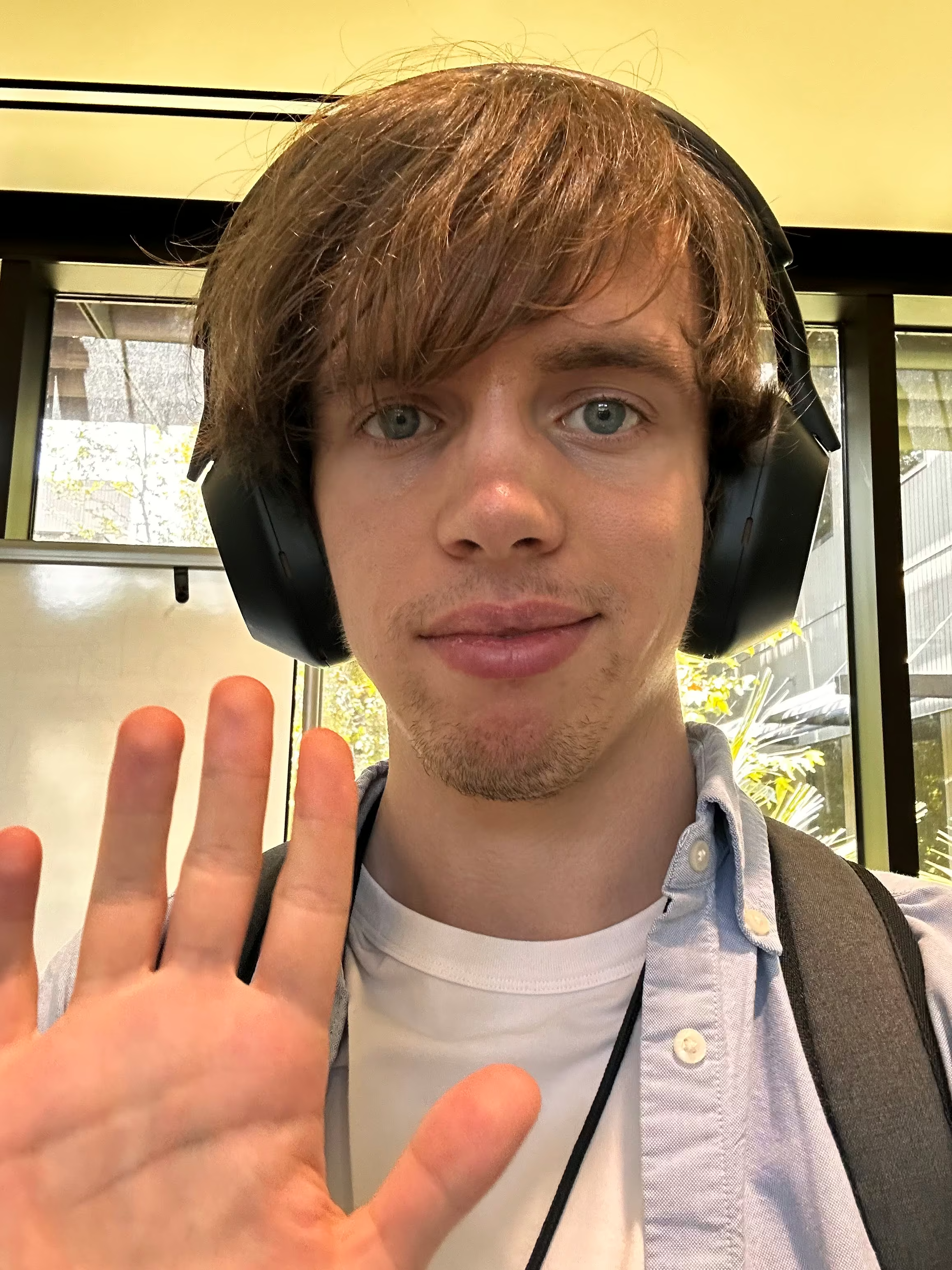
Audiobooks are how I first improved my English listening skills. Later, I started increasing the playback rate to practice speed listening. Today, I can listen comfortably at 3 to 4 times the regular rate. That, combined with 3 hours of listening per day, gets me through almost one average-length audiobook per day. So, I don’t quite meet the fake doctor’s recommendation of a book per day, but quite close.
Books generally fall into fiction and non-fiction categories. I try to read both in equal measure.
Fiction books
If you have ever read a good fiction book, you know the feeling of being lost in a different world. It is a great way to unwind after a stressful day and to stretch your imagination into alternate universes. And of course, there is a bittersweet feeling when your favorite book series is over. Whether it is a 3-book or a 43-book series, it always ends, and you are left feeling like you have lost a friend. You can always come back and read the books again, but it will not be the same as reading them for the first time.
To solve that problem, I tried using AI to generate a never-ending audiobook tailored to all my preferences! I took everything I like about my favorite books and told the AI to produce a story ... only to find out that today’s large language models are far from human-level fiction writers. Without much human input, the output is mediocre.
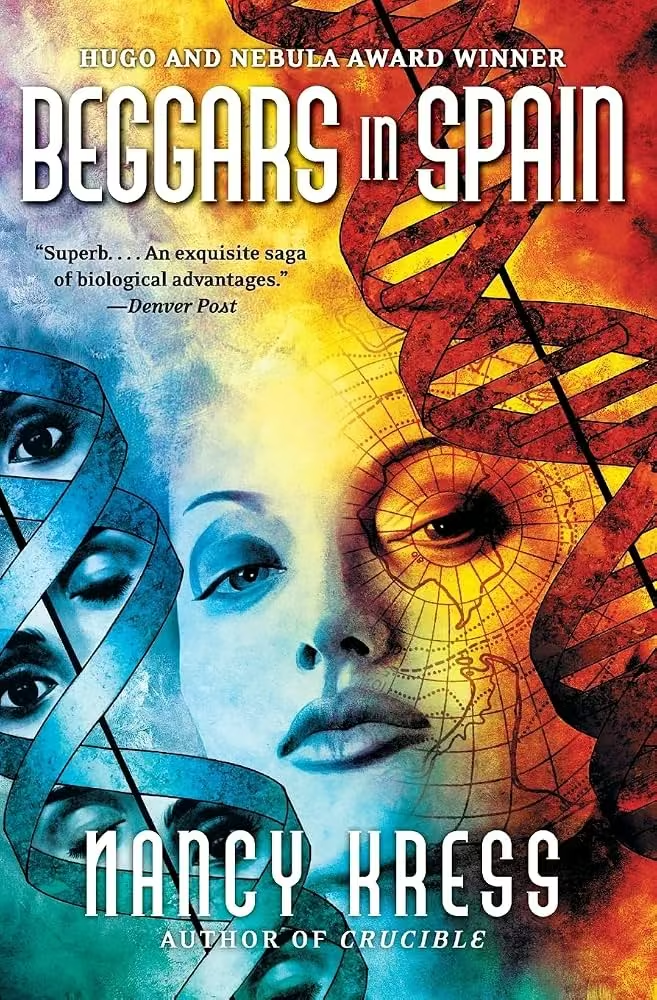
One example of the kind of book AI is far from being able to create is Beggars in Spain by Nancy Kress. For context, I am generally optimistic about the power of technology to advance humanity. In this science fiction book, we get unlimited free energy, a cure for all diseases, and no more need to sleep. Then, in a strikingly realistic and vivid way, the story portrays how these technologies can reduce humanity to tribes of illiterate hedonists. When I read it, I was shocked that such a thing could happen 🤯.
Non-fiction books
Non-fiction books, on the other hand, are written with the deliberate purpose of teaching you something or convincing you of something. Unlike podcasts, articles, or YouTube videos, books require months, or sometimes years, of research and writing. When you buy a book, you are buying a condensed version of the author’s knowledge and experience. Once you start one, you aren’t interrupted halfway through by an ad for pizza, as you might be with a YouTube video. At least, I hope they don’t start putting ads in my books 🍕.
With non-fiction books, you have to be careful, though. Whatever you read, most of it will be forgotten quickly, especially if you don’t use it in your daily life. That is just how your brain works. At the same time, for things related to my job, I find it best to skip the book and learn directly through practice and mistakes. After all, your mistakes are far more memorable than any book could ever be.
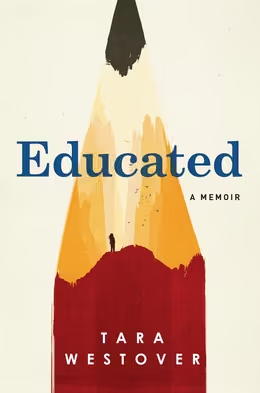
One book I cannot forget is Educated by Tara Westover. The author talks about a survivalist childhood during which she lived in a dangerous environment and was forbidden to study. Yet despite it all, she managed to sneak in enough study time to get into college and eventually earn a doctorate from Cambridge. I read this book just as I started my college journey, and whenever I had a difficult day, I would remember that it is still far easier for me than for others.
In general, I've found that non-fiction books are great for learning about things I don’t experience in my daily life. I am currently reading about city planning, the financial system, and anthropology.
While I won’t remember most of the information I read, these books expand my horizons and shape my worldview. The next time my friend complains about the walkability of his hometown, I can bring up interesting facts I didn’t know I knew.
I really like to read non-fiction books that hold opposing opinions, one after the other, and compare their arguments. My favorite kind of book covers both sides of an argument equally and calls for a better middle ground. We could all benefit from listening to the other side more.
One lesson I have learned from consuming so many audiobooks is that listening alone doesn’t make you a great writer or improve your public speaking, which is why I joined Toastmasters (not a cult!).
By now, I have read
over a thousand books.
For reference, if these were paper books, the shelves needed to store them would
fill an entire living room wall - twice!
And yet, to paraphrase what Steve Jobs once said, I can fit a thousand audiobooks on my smartphone, and listen to them all with just my favorite pair of headphones.
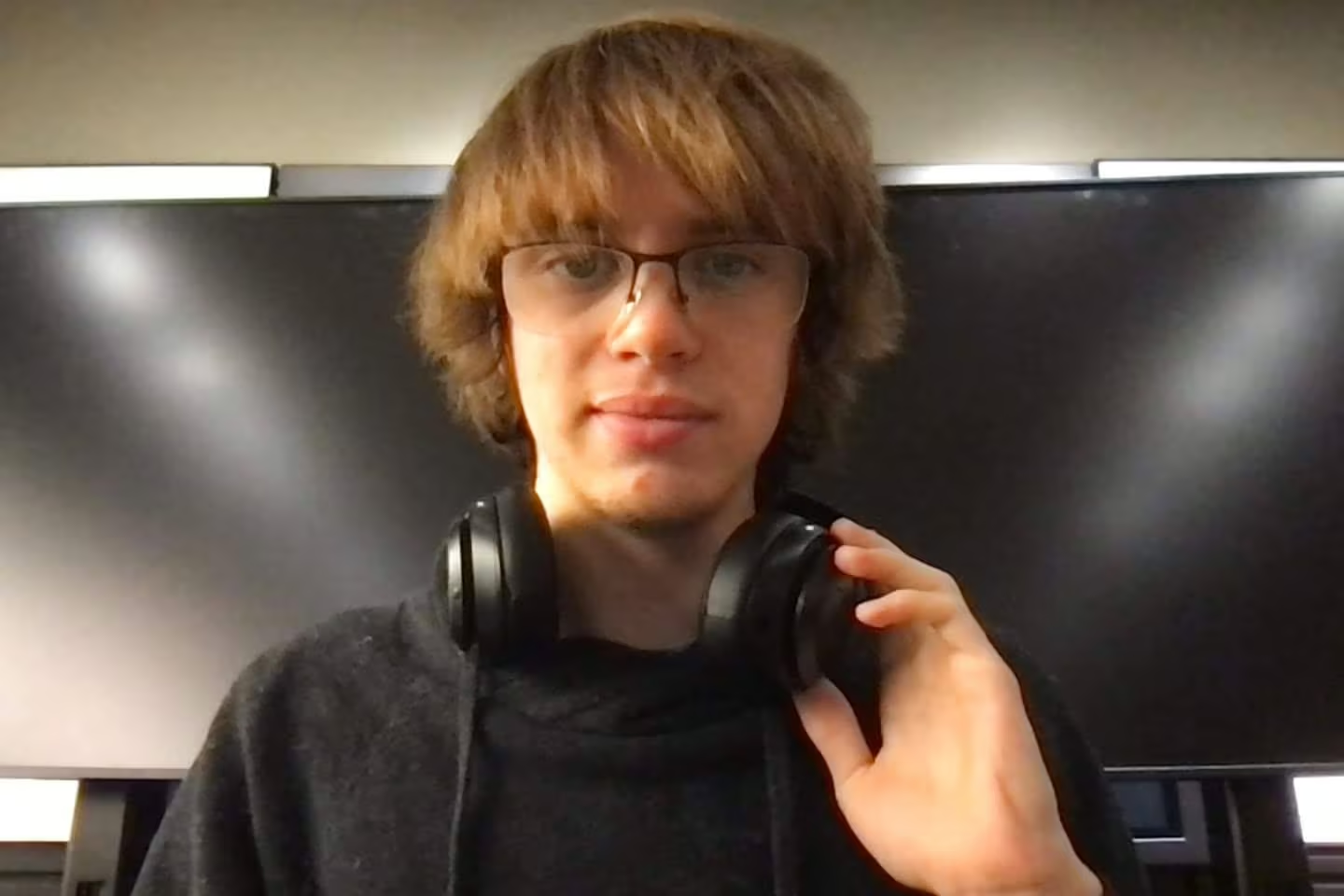
This article originated as a Toastmasters Icebreaker speech.
Have thoughts? Leave a comment.
Opinions = my own.